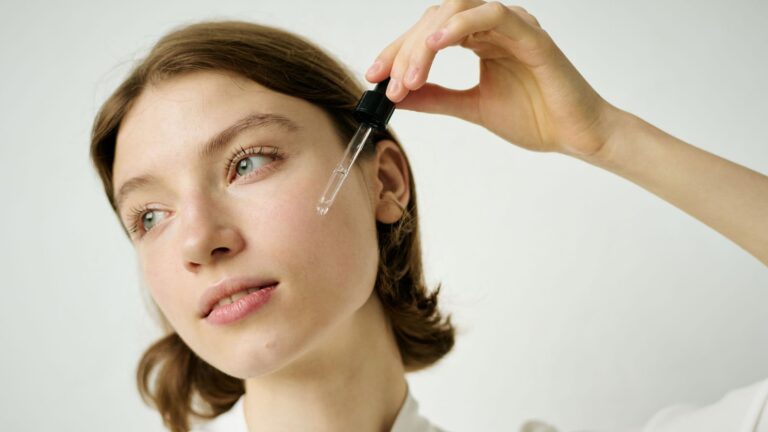

There is a specific age you are supposed to start anti-aging skincare and it is not the age you think.
As an Amazon Associate I earn from qualifying purchases. Read full disclosure here
One question I frequently get is, “When should you start using anti-aging products?” The short answer: it’s never too early to begin. Starting anti-aging products early in your skincare routine helps your skin perform at its best for longer. By introducing these products at the right time, you can maintain your skin’s youthful appearance and delay the signs of aging.
My previous blog post focused on anti-aging foods, this serves as a foundation for the prevention of premature aging. If you have not read it yet, then I suggest you read it before commencing with this post.
The skin in itself does a whole lot of functions that we are barely even aware of. It self-regulates, renews, protects from toxins, maintains moisture content, and regulates skin tone. But as aging progresses, the skin forgets this and starts to fall short of its job. That is why we need to remind the skin to remember its functions with a skincare routine. Let’s find out when to start using anti-aging products and the best age to begin for your skin.

Teens to Early ’20s
At this tender age, your skin is already doing its job meaning it is self-exfoliating, renewing, and independent. So you do not need to burden your skin with any step 10 anti-aging skincare routine. Just maintain a simple and gentle skincare routine, this serves as a preventive measure and does wonders to your skin.
Look for products that are mild and gentle for your skin. Just having a cleanser, moisturizer, and sunscreens and maintaining good diets and habits is enough to start your anti-aging skincare routine.
Cleansing
The golden rule when it comes to cleansing is to be as gentle as possible. Use lukewarm water when bathing, and ensure your bar soap is gentle as possible. Then select a cleanser that is gently and close to your skin’s natural PH. I recommend Etude House – Soon Jung pH 6.5 Whip Cleanser.

Moisturize
Most of the time, we often forget to moisturize and this is an important step that should not be missed. This step helps the skin to remain hydrated and stay moist. You don’t need thick moisture, just a gel water-based moisturizer is enough. You can find a really good one at Neutrogena hydro boost line.

Sunscreen
When it comes to the primary anti-aging skincare routine, you would agree with me that it all starts with sunscreens. Sunscreens block both UVA and UVB light which interacts at different layers of the skin. UVA penetrates deep into the dermal layer of the skin meaning they affect both epidermal and dermal layers while UVB affects the epidermal layer where skin cell renewal takes place.
For that reason, selecting a sunscreen that blocks both UVA and UVB light is highly recommended. You can go for sunscreen of at least 30 SPF of which my favourite is the Supergoop SPF 50 lotion

The late ’20s – early ’30s
At this age, stress level becomes so high, that you barely sleep enough. You might even maintain a poor diet and forget to apply sunscreens because there is always a rush to get things done as fast as possible. Hyper-pigmentation and sunspots are more noticeable. Also, the skin becomes dryer and dull due to lack of oil production and the skin defence mechanism is weakened
This is the best time to start introducing antioxidants, chemical exfoliants, and moisturizers into your anti-aging skincare routine. You may also want to introduce niacinamide, although this step is optional
Antioxidants
The body already has a natural defence mechanism to protect us from free radicals and sunburn but as we age this defence mechanism slows down due to stress. Therefore, using antioxidants orally and topically is a good start. For the topical application of antioxidants, the most potent and effective is vitamin C. However, there are other antioxidants such as CoQ10 and alpha-lipoic acid you can start with such as The Inkey List Q10 face serum

Moisturizer
Look for moisturizers with humectants such as hyaluronic acid, glycerin, sodium lactate, honey, and propylene glycol. A humectant acts exactly like a sponge, it draws water from the atmosphere into your skin. To get the most out of humectants, it is a great idea to start with hydrating serums because serums contain active ingredients that penetrate the skin more than the normal moisturizer. One of my favourites is The Inkey List Polylutamic acid

Chemical exfoliants
The skin appears dull because the skin needs help to remove dead skin cells. Therefore, the application of chemical exfoliants will take the skin back to normalcy and help to look rejuvenated and fresher. Applying exfoliants may be addictive so it is recommended to exfoliate once or twice a week to avoid over-exfoliation. My favourite chemical exfoliant at the moment is the Krave Beauty Kale AHA

Protect the skin barrier
The skin barrier must be protected at all costs because the natural moisturizing factors such as ceramides, cholesterol, and fatty acids are decreasing. These three soldiers are important to prevent epidermal water loss from the skin and protect the skin barrier from damage. You should start introducing moisturizers with ceramides and oils rich in linoleic acid.

The Late ’30s and Above
During this age, the body begins to undergo several significant changes that affect the hormones in women and men. For women, the reduction in estrogen levels takes place while testosterone levels in men are decreased. These significant changes pave the way for the skin cells to slow down. As a result, collagen, elastin, and hyaluronic acid within the dermis break down.
These significant changes become more noticeable in the form of fine lines, wrinkles, and saginess. Therefore you might need to start applying some active ingredients to remind the skin cells of what it is capable of. This is a great time to start incorporating vitamins and peptides into your skincare routine
Vitamin A (Retinol)
Retinol is the most studied vitamin with FDA approval in the treatment of wrinkles. I would highly recommend you read my post on “The beginner’s guide to retinol“. Since Retinols can be irritating to the skin, it is always a good idea to start with a low percentage and then move your way up as your skin starts to adapt. You may also want to go for other retinol derivatives that act exactly like retinol with little to no irritation.
The Ordinary Granactive Retinoids 2% is a good start

Vitamin b3 (niacinamide)
Niacinamide has lots of benefits; it helps to increase ceramide production, boost collagen and elastin, and reduce the appearance of hyperpigmentation amongst other things. You can call Niacinamide “Mr Incredible”.
If Retinol irritates your skin then Niacinamide has a cooling and soothing effect. This makes it a perfect pair for Retinol.
You can apply Niacinamide on your skin days before retinol to prep your skin for Retinol. If you would like to use them at the same time, it’s better to apply niacinamide first (water-based) before Retinol (oil-based) at a five-minute interval.
The ordinary Niacinamide 10% + Zine 1%

Vitamin c (ascorbic Acid)
Vitamin C is very important when used before applying sunscreens in the morning. Research has shown that using sunscreens reduces only 55% of free radicals. That is why the addition of vitamin C right before sunscreens protects a greater amount of free radicals than sunscreens used alone. Also, the addition of vitamin C serums stimulates collagen in the skin. Since vitamin C is very unstable and highly sensitive to oxygen, it is best to store it in a place with little to no light.

Conclusion
Starting an anti-aging skincare routine early is the key to maintaining healthy, youthful skin. Whether you’re in your 20s, 30s, or beyond, choosing the right products for your age and skin type can help your skin perform at its best. Remember, it’s never too early to start taking care of your skin. I hope you found this post helpful—thank you for reading!
Photo by Anna Shvets from Pexels
Amazon and the Amazon logo are trademarks of Amazon.com, Inc, or its affiliates.